

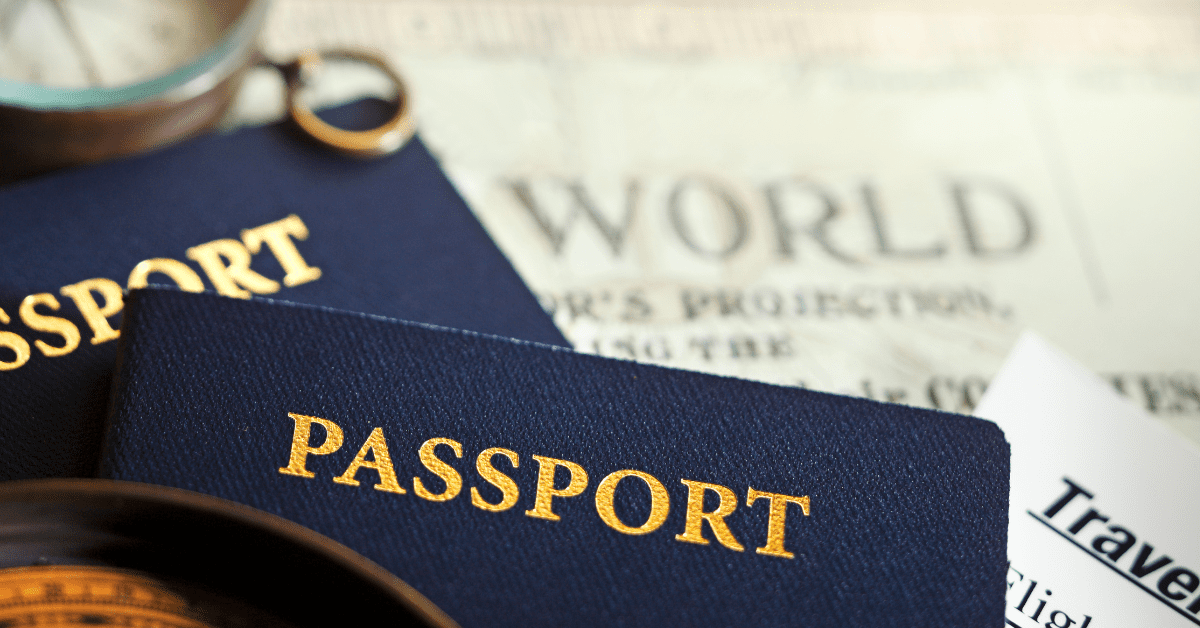
In a world of new borders and tightening scrutiny, every citizen must be ready to trade, travel, and transact—and authenticated identity has become the single most vital asset anyone can hold.
The Challenge: A World Rewriting Its Borders
The world is redrawing its lines—not just on maps, but in law, technology, and data. Geopolitical realignments, surging migration pressures, and the rise of AI-driven border systems have fundamentally changed what it means to move through the world. Borders are no longer only physical. They are regulatory, digital, and increasingly biometric. For every citizen—regardless of nationality, profession, or passport—the ability to trade, travel, and transact across these new frontiers now depends on one foundational asset: a verified, authenticated identity.
The authenticity of documentation has become the invisible currency of global participation. Whether attending an international conference, exporting services, relocating for a new opportunity, or opening a cross-border account, the primary bottleneck is rarely capability—it is the inability to prove, quickly and without question, who you are. Unverified credentials, inconsistent records, and documentation gaps do not merely delay transactions; they disqualify individuals entirely from the systems that govern global opportunity.
“Impact is measured by the silence of a seamless transition—where the right document is always ready, and compliance is absolute.”
A Global Policy Shift: Governments Are Acting Now
This is not an abstract future risk. Governments across the world have already moved decisively, and the consequences for unprepared citizens are immediate and real.
United States: REAL ID Enforcement
The United States has enforced its REAL ID Act since May 2025, requiring all domestic airline passengers to present a federally compliant, verified form of identification. Standard state-issued driver’s licences that do not meet the new security standard are no longer accepted at airport checkpoints. From February 2026, travelers without compliant ID face a $45 biometric verification fee simply to board a domestic flight. The REAL ID is built on strict proof-of-identity, proof of Social Security number, and two proofs of residency—its core message is clear: unverified identity is no longer tolerated, even within national borders.
United Kingdom: The BritCard & Digital ID Scheme
In September 2025, Prime Minister Keir Starmer announced the United Kingdom’s national Digital ID scheme—informally dubbed the “BritCard”—for all UK residents, with full rollout targeted before the end of the parliamentary term in 2029. The digital ID, held on a smartphone via the GOV.UK Wallet app, is mandatory for proving the right to work and is designed explicitly to curb illegal immigration and eliminate document forgery. A government consultation was published in March 2026, and the scheme is already being used as a model to consolidate identity across banking, healthcare, and public services. The UK has simultaneously introduced its Electronic Travel Authorisation (ETA) for overseas visitors, with full enforcement from February 2026—meaning even tourists require pre-approved digital credentials before setting foot on British soil.
European Union: EES, ETIAS & the Third Country National
For any citizen classified as a Third Country National (TCN)—a non-EU, non-Schengen traveler—the European Union has introduced two landmark systems that permanently change the experience of entering Europe. The Entry/Exit System (EES), launched progressively from October 2025 and fully operational from April 2026, replaces physical passport stamping with digital biometric registration: facial images and fingerprints are captured at every crossing across 29 Schengen nations. No longer can overstays go undetected; the system automatically calculates permitted days and flags violations in real time.
Following the EES, the European Travel Information and Authorisation System (ETIAS)—comparable to the US ESTA—is expected to launch in the final quarter of 2026, requiring visa-exempt TCNs from 59 countries to obtain pre-travel authorisation before entering Europe. For South Africans, Britons post-Brexit, Americans, and citizens of dozens of other nations, travel to Europe now requires a layer of digital pre-clearance that simply did not exist three years ago. The EU’s eID Wallet framework, aligned with the eIDAS 2.0 standard, is simultaneously expanding digital identity access across all 27 member states.
South Africa: Home Affairs as a Primary Driver
South Africa is undergoing its most significant Home Affairs transformation in decades. Under Minister Leon Schreiber, the Department issued a record four million Smart ID cards in 2025—nearly double its previous annual average—while cutting turnaround times by 67%. A revised White Paper on Citizenship, Immigration and Refugee Protection, published in December 2025, proposes a points-based visa system, an Intelligent Population Register capturing biometrics of every person in South Africa, and mandatory digital birth and death registration for citizens and foreigners alike. The Electronic Travel Authorisation (ETA), already live for international visitors, is being scaled across all airports and major land ports with facial recognition technology. The explicit mandate: use digital identity infrastructure to curb illegal migration and position South Africa as a capable, modern state. In 2026, the DHA’s flagship reform is the Digital ID—enabling South Africans to verify their identity remotely via secure facial recognition directly from their mobile phones.
The Solution: Every Citizen Must Be Documentation-Ready
Documentation readiness is no longer the exclusive concern of large organizations or governments. It is a personal strategic imperative. Every individual who wishes to remain competitive must treat their identity credentials, professional qualifications, and compliance records as living assets—continuously maintained, digitally accessible, and internationally verifiable. A documentation-ready citizen is equipped to:
- Trade across borders with verified credentials that satisfy the authentication demands of AI-driven customs, financial, and procurement systems.
- Travel with confidence, navigating biometric border controls, digital pre-clearance systems, and ETA/ETIAS requirements without delay or disqualification.
- Transact securely in global markets, accessing banking, investment, and commercial platforms that require real-time identity verification as a baseline condition.
- Adapt rapidly as geopolitical conditions shift, with documentation frameworks that flex to meet evolving jurisdictional requirements anywhere in the world.
The Imperative: Identity Is the New Passport
In 2026, the speed of participation is dictated by the speed of verification. Verification is the foundation of AI and data mobility—any citizen whose documentation cannot be authenticated in real time is, effectively, excluded from the systems that govern modern commerce, movement, and civic life. In a geopolitically fragmented world, a verified identity is the most portable asset a person can hold. It transcends nationality, crosses jurisdictions, and signals to every system—human or automated—that you are prepared to participate on the world’s terms.
The citizens who will thrive are not necessarily those with the most resources, but those with the most readiness. Build your documentation foundation now—and let every border you cross, every deal you close, and every market you enter become proof that you were prepared.
This article is written without prejudice. Only for information purposes and does not constitute legal advice.