Malta’s Steadiness Isn’t Weather. It’s Architecture.

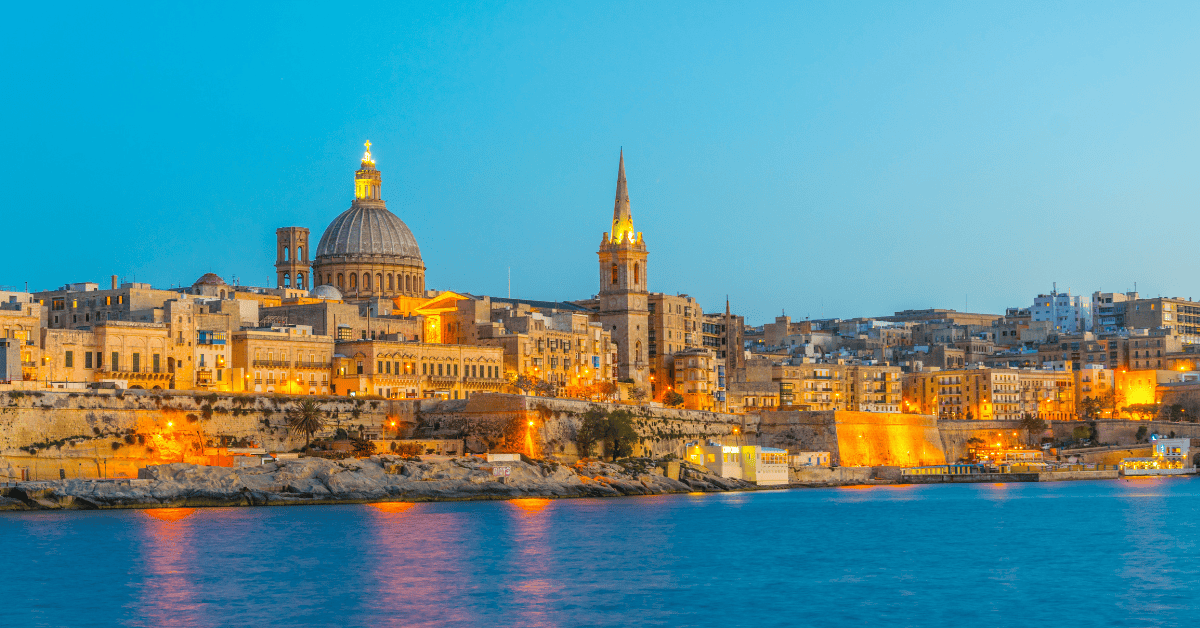
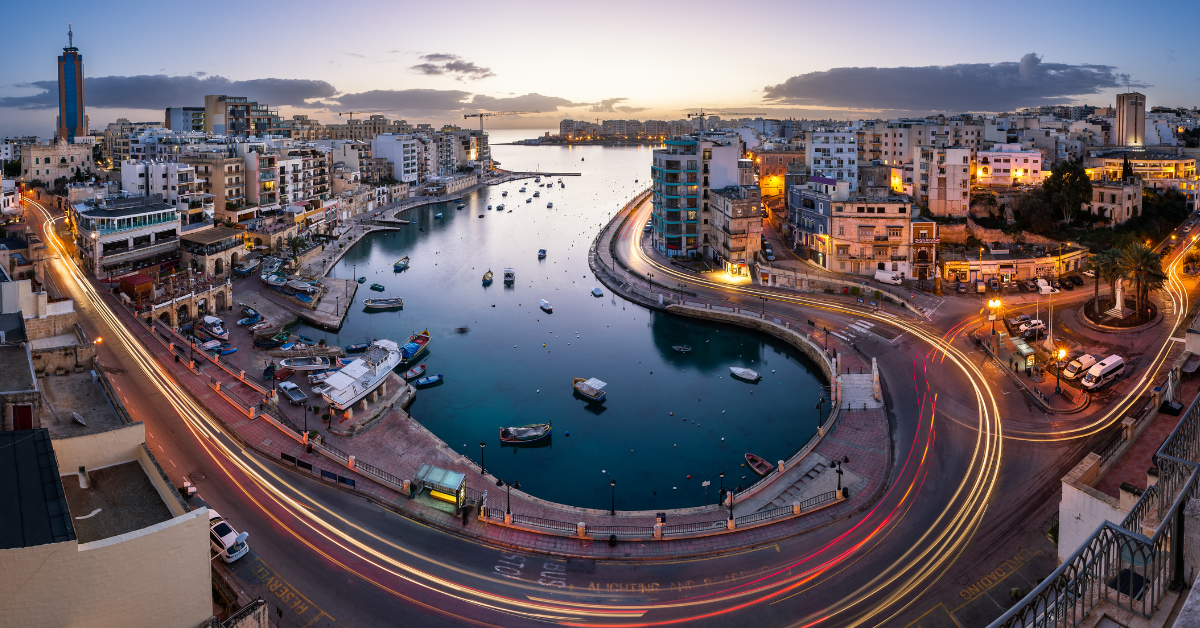
Ask why Malta works as a place to hold money and the answer usually involves the light on the harbour.

It’s a fair instinct and a useless one. Charm doesn’t hold capital. Sunsets don’t underwrite a title deed. Plenty of beautiful places have separated careful people from their savings, and a view has never protected anyone from a rule change.

The better question: why should a 316 km² island be steadier than markets ten times its size?

The answer isn’t geography. It’s design.

Two roads for a small country

Small countries chasing international business have two options.

The first is to compete on leniency — loosen the rules, drop the thresholds, take whatever volume arrives, and hope the reputational bill lands after someone else is in charge. It works briefly. It produces a thrilling few years and a correction that punishes everyone who mistook momentum for foundation.

The second is to compete on trust. Hold the standards. Accept that this filters out a certain kind of capital. Build something slower that compounds instead.

Malta took the second road and has been unusually consistent about staying on it. The regulatory posture rests on a combination that sounds contradictory until you watch it work: rigorous compliance paired with genuine openness to new instruments and new business models. Strict without being sclerotic. The standards don’t move; the willingness to engage with something unfamiliar does.

That distinction is worth more to a property owner than any yield figure on a brochure.

Predictability is the product

A market chasing volume delivers excitement and volatility in the same envelope. A market playing for institutional credibility delivers something duller and far more valuable: predictability.

What that’s worth depends on where you’re standing.

For a parent or grandparent putting something in a young person’s name, it’s the entire proposition — a foundation that has to survive your absence, their inexperience, and twenty years of the unforeseeable. A jurisdiction intending to trade on its reputation in 2050 is structurally unlikely to rewrite the ownership rules underneath that gift.

For someone deciding what to do with an inheritance, it’s what stops a decision made in a difficult year from being undone by a policy change in a later one. Inherited capital rarely fails because of the wrong building. It fails because of the wrong jurisdiction, discovered five years too late.

And for anyone starting out with more time than money, it’s the surface patience compounds against. Time is the one advantage that can’t be bought later — but it only pays out in a market that doesn’t periodically reset the board.

Same quality. Three different reasons to want it.

A country planning in decades

Malta’s national planning runs to 2050, with financial services named a priority sector and stated ambitions to grow its share of the economy substantially over the coming decade.

Whether every target lands is almost beside the point. What matters to someone holding an asset here is the posture. A country planning in twenty-five-year arcs behaves differently from one governed election to election. It funds infrastructure that won’t pay back for a decade, and guards a reputation it expects to still be using in 2050.

The results have been substantial — Malta’s economy has grown far faster than the Eurozone average over the past decade, a gap too wide to write off as luck or a single fortunate sector. (Nominal growth, and one indicator among many rather than a promise.)

What sits underneath the number is less glamorous than the number: diversification across several industries rather than dependence on one, a position bridging Europe and North Africa, EU membership with the passporting rights that follow, and a workforce that speaks its clients’ languages. Alongside that, a digital build-out at a standard matching far larger capitals — to the point where Maltese firms now export technology services rather than import them.

None of it is romantic. All of it is why the place holds.

Where policy meets rent

The link isn’t automatic, and it shouldn’t be overstated. Financial services regulation doesn’t set anyone’s rent. It shapes almost everything around it.

It shapes the tenant. The strongest rental corridors — Sliema, St Julian’s, Gzira — are filled with professionals in finance, technology, gaming, compliance and corporate services. A country deliberately cultivating high-value skilled employment is also, indirectly, cultivating a tenant pool. Rental demand there is downstream of the jobs market, and the jobs market is downstream of policy.

It shapes whether the rules stay put. The most destructive event for a foreign property owner is rarely a market dip. It’s a rule change — a tax treatment withdrawn, an ownership right narrowed, a programme rewritten without warning. A jurisdiction that has staked its future on being seen as credible has a powerful, self-interested reason not to do that.

It shapes how broad the growth is. An economy resting on one industry passes its volatility straight through to property. A diversified one absorbs a bad year in one sector without the market lurching. That’s the difference between corridors that held through two global downturns and markets where timing mattered more than the asset.

There’s a forward signal too: sustainability is moving out of the compliance box and into commercial decisions, including how credit gets priced. For anyone thinking generationally, the trajectory of building standards, energy costs and what stays financeable two decades out is not a footnote.

The unglamorous part

What capital needs at the moments it changes hands — when it’s most exposed — isn’t boldness. It’s steadiness.

And steadiness isn’t a mood, a climate, or a quality of the light. It’s an outcome. Someone chose credibility over quick volume. Someone wrote rules meant to still make sense in 2050 and then, harder, left them alone. Someone built the infrastructure before the demand arrived.

That’s the part the photography can’t show. It’s also the only part that holds.

From understanding to acting

Understanding why Malta holds is one thing. Choosing the right property in the right corridor, navigating residency, understanding the tax implications, and working through schools, healthcare and the practicalities of relocation is another entirely.

That second part is where most of the confidence built by an article like this quietly evaporates — not because the case was wrong, but because the distance between a good decision in principle and a good decision in practice is filled with detail that nobody tells you until you’re in it.

That’s where MaltaLifestyle helps. Fifteen years of living here, investing here, and walking others through the same questions — from the first conversation about whether Malta is right at all, to the specifics of a particular street, a particular building, and a particular set of circumstances.


Thinking about Malta — for yourself, for someone you’re providing for, or as a first move?

Meet Merle online, no obligation: maltalifestyle.com/meet

General information only. Not financial, tax, or legal advice. Figures are historical or third-party illustrations; past performance does not predict future results. Residency eligibility depends on the specific programme and current rules — confirm with a qualified, licensed adviser.
The Steady Hand: Malta and the Three Ages of Capital


Money changes hands at three moments in a life. Someone gives it. Someone receives it. And someone, full of energy, invests it for the first time. A gift, an inheritance, a first move — three different people, three different feelings, one quiet question underneath all of them: will this hold?

After fifteen years investing in and living on a 316 km² island, I’ve watched all three play out, often within the same family. And I’ve come to believe the markets that feel most exciting at each of those moments are rarely the ones that serve the money best. What capital usually needs at the point it changes hands isn’t boldness. It’s steadiness.

This is the case for Malta as that steady hand, told through the three people who hold the money.

 The Donor: the greatest gift outlasts the giving

For a parent, grandparent, or benefactor, the real question is almost never how much to give. It’s what the gift can withstand time, distance, and the excitement of someone discovering capital for the first time.

“Parents and grandparents aren’t asking how to make a young investor rich. They’re asking how to give them a foundation, something steady enough to hold while the recipient finds their footing.”

Cash, however generous, can be spent on a whim. A structured asset — owned, titled, generating income — can’t. It can only be managed and grown. That’s the donor’s real choice: steadiness over size. A title deed in a young person’s name gives them something real to manage (rental income, decisions, accountability ) and in my experience that shapes financial habits in a way a lump sum never does.

The Inheritor: rush, freeze, or choose well?

An inheritance arrives with weight. Someone trusted you with something irreplaceable, and acting too quickly, or not at all, can both be costly.

“The people who do well share one quality: they separate the emotion of the moment from the decision of the decade.”

The markets that feel most exciting in that moment aren’t always the ones that serve inherited capital best. London’s leasehold flats under 85 years have historically carried £20,000–£35,000 in extension costs, and sterling has swung over 20% against the euro in a single year. Dubai has seen two corrections since 2008 (roughly 60% and 30%) where timing mattered more than asset quality. Cape Town’s headline yields of 10–12% have been quietly offset by a rand losing 6–8% against the euro a year.

What I’ve found steadies inherited capital is unglamorous: full ownership, no debt service, and a currency that isn’t working against you. When I first bought in Malta with no mortgage, every euro of rental income was a return on capital, not a partial offset against a loan. For a euro-based inheritor, euro income and euro returns remove a layer of quiet erosion that a higher headline yield elsewhere rarely makes up for.

The Young Investor: you have time

Being a young investor comes with energy,  the shortlist of cities, the late-night research, the urge to move fast. That energy is valuable. On its own, it isn’t a strategy. It needs a market that won’t move as fast as the excitement does.

 “I had the same list everyone has — London for prestige, Dubai for yield, somewhere in the sun for lifestyle. Fifteen years later, I understand why Malta was the answer I wasn’t expecting. It didn’t compete with my excitement. It outlasted it.”

Time is the one advantage that can’t be bought later, but it rewards patience, not speed. A euro-denominated, EU-titled asset on an island that physically cannot oversupply itself has historically compounded quietly while a career gets built around it. That’s not a dramatic growth story. It’s the absence of one, which at this stage of life is precisely the point.

Final Thoughts

A donor wanted something steady enough to give. An inheritor wanted something steady enough to receive.  A young investor, full of energy, needs the same thing, not to slow down, but to be matched with a market patient enough to let that energy compound.

Have a question about your own stage — giving, receiving, or starting out?

Let’s chat, no obligation: https://wa.me/c/27825744661 


General information only. Not financial, tax, or legal advice. All figures are historical illustrations based on Malta Property Index data and personal market observation; past performance does not predict future results. Residency eligibility depends on the specific programme and current rules — confirm with a qualified, licensed adviser.

Malta: Your Luxury Gateway to the World’s Most Prestigious Sporting Events


For high-net-worth sports enthusiasts, the best events aren’t just about the action—they’re about access, hospitality, networking, and unforgettable experiences.

Positioned in the heart of the Mediterranean, Malta offers the perfect base from which to enjoy Europe’s and the world’s most prestigious sporting occasions, often just a short flight away.

From Superyachts to Centre Court

Summer begins with the glamour of the Monaco Grand Prix and the Mediterranean yachting season, where superyachts, luxury brands, and global business leaders converge.

Then comes the elegance of Wimbledon Championships—arguably the most prestigious event in world tennis—offering exceptional hospitality and unrivalled networking opportunities.

Racing at Its Finest

Horse racing enthusiasts can enjoy the royal pageantry of Royal Ascot and the style, excitement, and South African spirit of Durban July, two iconic social and sporting highlights on the global calendar.

Formula One’s Global Playground

The Formula One season continues with elite experiences at:

  • Italian Grand Prix
  • Singapore Grand Prix
  • Abu Dhabi Grand Prix

Each delivers a unique blend of luxury hospitality, international networking, and world-class entertainment.

Golf & Rugby: Where Relationships Are Built

Championship golf events such as the BMW PGA Championship and Alfred Dunhill Links Championship remain favourites among business leaders and investors.

For South Africans abroad, nothing compares to the atmosphere surrounding Springboks international fixtures, where sport and business networking come together in spectacular fashion.

Why Malta?

With excellent connectivity to Europe, the UK, and the Middle East, a thriving yachting community, and an enviable Mediterranean lifestyle, Malta places the world’s most exclusive sporting events within easy reach.

Live in Malta. Experience the world’s greatest sporting stages. From Monaco to Wimbledon, Royal Ascot to Durban July, Formula One to Springbok rugby—your next VIP sporting experience is closer than you think.

Beyond Cape Town, Dubai and London: Why Malta Deserves a Place on Your Investment Radar


When considering international investment diversification, familiar destinations often dominate the conversation.

Cape Town. Dubai. Mauritius. London.

But increasingly, sophisticated investors are looking beyond traditional choices toward opportunities that combine wealth preservation, lifestyle value, regulatory confidence, and future mobility.

One Mediterranean jurisdiction quietly ticking all those boxes is Malta.

This is not simply a property story.

It is a strategic positioning story.

What Smart Investors Are Looking For Now

Today’s globally minded investors are asking different questions.

They are not only pursuing capital growth. They are seeking hard-currency assets, inflation protection, secure ownership structures, and optionality for themselves and their families.

In a volatile world, resilience matters.

That is where Malta becomes particularly compelling.

As a European Union member state operating within the eurozone, Malta offers investors exposure to a euro-denominated market, a trusted regulatory framework, and access to one of the world’s most established economic blocs.

More Than Property: A Euro-Denominated Wealth Asset

For many South African investors, holding an asset in euros is not simply diversification — it is strategic protection.

A Malta investment can provide:

  • Exposure to a hard-currency euro asset
  • Potential rental income in euros
  • A natural hedge against inflation and currency volatility
  •  Access to a market supported by consistent international demand

But the real value lies in thinking beyond the purchase itself.

Rental yield, long-term capital appreciation, and wealth preservation become significantly more powerful when positioned within a stable European framework.

Lifestyle Value Meets Investment Logic

Unlike purely transactional markets, Malta offers something many investors increasingly value: a lifestyle asset with practical utility.

Whether used as an income-generating investment, future retirement base, family foothold in Europe, or part of a broader mobility strategy, the investment can serve multiple long-term objectives.

For those considering future residency or relocation pathways, Malta’s globally respected residency options create an additional layer of strategic flexibility.

Investment and optionality begin working together.

Structure Matters

Successful international investing is not only about choosing the right asset.

It is about structuring correctly.

Well-managed jurisdictions, compliant ownership frameworks, effective use of foreign allowances, favourable tax planning, and secure inheritance considerations all form part of a sound cross-border strategy.

Malta’s established regulatory environment and internationally recognised banking framework support investors seeking clarity, compliance, and efficient long-term ownership structures.

Think Beyond the Purchase

The strongest investments are rarely defined by acquisition price alone.

The deeper value often lies in what compounds over time:

  • Euro-denominated rental income
  • Long-term currency and inflation protection
  • Residency and mobility potential
  • Structured wealth preservation
  • Legacy and inheritance planning

In an increasingly complex world, investors are placing greater emphasis on assets that deliver both financial and strategic value.

Malta offers a compelling conversation worth having.

At MaltaLifestyle, we help South Africans and international investors navigate the broader picture — from property strategy and residency planning to long-term European positioning.

Malta Becomes the First Country to Give Every Resident Free AI Tools


There’s a reason global investors and digital professionals keep turning their attention to this small Mediterranean island. Malta has long punched above its weight — as an EU member, an English-speaking jurisdiction, and a hub for fintech, iGaming, and blockchain. But what’s happening right now takes things to a different level.

This month, the Maltese government launched AI for Everyone — a free, nationally-backed online course on Artificial Intelligence, open to every resident aged 14 and over. Developed by the Malta Digital Innovation Authority (MDIA) in partnership with the University of Malta, the course is self-paced, available in both Maltese and English, and requires no prior technical knowledge.

That’s impressive on its own. But the real headline is what comes next.

Free premium AI tools for every citizen

Anyone who completes the roughly two-hour course will receive a free one-year subscription to either ChatGPT Plus or Microsoft 365 Personal Copilot — at no cost. This is the product of a government-brokered international partnership with OpenAI and Microsoft, forged after Maltese diplomats facilitated introductions during high-level meetings in Silicon Valley.

OpenAI’s Head of OpenAI for Countries, George Osborne, was unequivocal in his praise: Malta, he said, is “leading Europe and the world in bringing AI to all its citizens.” That’s not marketing language — it’s a recognition that Malta has become a genuine first mover in national AI literacy infrastructure.

What this means for investors and those relocating

For businesses considering where to plant a flag in Europe, workforce quality is everything. A government actively upskilling its entire population — from teenagers to retirees — in the technology reshaping every industry is a significant signal. It means the talent pipeline is being invested in at a national level, not just left to the private sector.

Microsoft’s representative put it plainly: “In the AI economy, the most important infrastructure is not just data centres — it is human capability. Today, Malta is investing in that capability at national scale.”

This initiative sits within a broader strategic commitment. Malta was among the first countries in the world to establish a national AI framework back in 2019. Its current budget includes a €100 million investment in digitalisation, covering AI, IoT, cybersecurity, blockchain, augmented reality, and robotics — all aimed at increasing national competitiveness.

A small country making outsized moves

What makes Malta attractive has always been the combination: EU passport and market access, a common-law legal tradition, English as an official language, a well-regarded regulatory environment, a Mediterranean quality of life, and a government that moves fast. The AI for Everyone programme adds something new to that list — a demonstrable commitment to keeping the workforce ahead of the curve.

For entrepreneurs, remote workers, and companies looking to establish European operations, the message is clear. Malta isn’t waiting for the future to arrive. It’s building it.


Thinking about making the move?

With over 15 years of on-the-ground expertise, Merle-Louise Purvis Whale provides a highly personalised, trusted pathway into Malta life — ensuring your transition is not only seamless, but strategically sound.

merle@maltalifestyle.com


Reference: https://www.gov.mt/en/Government/DOI/Press%20Releases/Pages/2026/05/16/pr260871en.aspx

Travelling Across Europe with your pets? Here’s what you need to know.

Planning a holiday with your dog, cat, or ferret? Good news — updated EU rules are making it easier than ever to bring your four-legged family members along for the adventure.

Whether you’re road-tripping through France, hopping on a ferry to Greece, or visiting relatives in a neighbouring country, the European Union has streamlined the rules that govern travelling with pets. The updated regulations focus on three key areas: pet identification and documentation, the maximum number of animals you can travel with, and procedures for EU transit and re-entry.

What’s actually changed?

The EU has updated its legal framework for the non-commercial movement of dogs, cats and ferrets between member states. The new rules are grounded in Commission Delegated Regulation (EU) 2026/131 and aim to modernise traceability and health certification, bringing them in line with current veterinary best practices.

Here’s a plain-language breakdown of the three pillars of the update:

Identification & documentation – Microchipping standards and passport models have been updated for clearer traceability across all EU countries.

Maximum 5 pets per journey – You may travel with up to 5 dogs, cats or ferrets in a single vehicle for non-commercial purposes.

Transit & re-entry – Clearer procedures have been set out for pets passing through the EU or returning after time abroad.

Key dates to mark in your calendar

The new rules are being rolled out in two stages. Make sure you know which changes apply to your next trip:

October 2026: Updated animal health certificates come into effect. New certificate models apply for pets entering the EU from non-EU countries. These are valid for 10 days from the date of issue (extended for sea travel).

January 2028: Updated identification & passport requirements apply: New EU pet passport models (set out in Annex I, Part 1 to Commission Implementing Regulation (EU) 2026/705) become mandatory. Existing passports issued before this date continue to remain valid under transitional rules.

Already have a pet passport? Don’t worry — pet passports issued under earlier models remain valid. If your passport was issued before 22 April 2026 under Regulation (EU) No 577/2013, it continues to be accepted until 1 January 2028. After that date, your vet can issue an updated model.

Before you travel: the essentials

Whether you’re travelling within the EU or entering from a non-EU country, your pet must meet these baseline requirements:

Microchipping: Your pet must be identified by an implanted microchip meeting the technical specifications of Article 70a of Commission Delegated Regulation (EU) 2019/2035. Importantly, the microchip must be implanted before the rabies vaccination is given — if the vaccine came first, it won’t count for travel purposes.

Rabies vaccination: Your pet must be vaccinated against rabies by an authorised veterinarian. Pets must be at least 12 weeks old before receiving the vaccine, and you’ll need to wait 21 days after the primary vaccination before your first journey into the EU.

Valid documentation: Within the EU, your pet travels on a European pet passport — issued only to owners resident in the EU — which records microchip details, vaccination history, and your contact information. Pets entering from non-EU countries require an animal health certificate issued by an official veterinarian.

Travelling to Finland, Ireland, Malta or Norway? Dogs moving to or from these countries (and Northern Ireland) must receive treatment against the tapeworm Echinococcus multilocularis, as these areas are free from this parasite. Other destinations are exempt from this requirement.

The 5-pet rule – For non-commercial travel, the maximum number of dogs, cats and ferrets you can bring in a single vehicle is five. If you’re travelling with more — for example, to a registered competition, exhibition or sporting event — you’ll need to provide documentary evidence of the event and ensure all animals are over six months old.

What about travelling with young pets?

Some EU countries authorise movement of puppies, kittens and young ferrets that are under 12 weeks old and unvaccinated, or between 12 and 16 weeks old and recently vaccinated (within 21 days). In these cases, additional documentation is required — either a declaration from the owner confirming the animal has had no contact with wild susceptible species since birth, or the young animal must still be dependent on its vaccinated mother, whose own passport confirms her pre-birth vaccination.

Rules vary by destination, so it’s worth checking with your vet and the relevant authority in the country you’re visiting before you travel.


Curious what a smooth EU pet journey looks like in practice? The European Commission’s page features real stories from pet owners travelling across the EU — with tips, inspiration, and the full official rules.

Read the full guidance here – https://food.ec.europa.eu/animals/live-animal-movements/dogs-cats-and-ferrets/travelling-pet-within-eu_en

Choosing Your Island Strategy: Why Malta Is the Golden Anchor

For the globally mobile, choosing where to plant your flag is one of the most consequential decisions you’ll make. And more often than not, the answer isn’t just one place — it’s knowing which places serve which purpose.

Here’s a question worth sitting with: what do Malta, Mauritius, and the Maldives have in common?

Beyond sharing the letter “M” and island geography, they each attract high-net-worth individuals and internationally mobile families — but for entirely different reasons. Once you understand those reasons, something clicks: a genuinely powerful global strategy starts to take shape.

Let’s walk through all three.

🇲🇹 Malta — The Golden Anchor

If you’re building a long-term international life, Malta is where the story begins. Sitting at the crossroads of Europe, North Africa, and the Middle East, it isn’t just a pretty island — it’s a genuinely strategic foundation.

As a full EU member state with Schengen access, Malta carries real global credibility. But what makes it stand apart from other EU jurisdictions is the flexibility it offers alongside that credibility. For non-domiciled residents, there’s a remittance-based tax system that allows for smart, compliant structuring — something you won’t easily find elsewhere within the bloc.

Then there’s the practical side. Malta is English-speaking, safe, and well-connected — direct flights to London, Dubai, and every major European hub. The healthcare and education systems are strong. And the pathways to residency are clear and structured, whether you’re planning for yourself, your family, or the next generation.

Put simply: Malta doesn’t force you to choose between strategy and lifestyle. It delivers both — and holds everything else together.


🇲🇺 Mauritius — The Bridge

Head southeast into the Indian Ocean, and Mauritius presents a very different but genuinely useful proposition. This is a jurisdiction built for those with cross-border investment interests — particularly into Africa and parts of Asia.

Mauritius has accessible residency-by-investment pathways and a balanced lifestyle in a beautiful tropical setting. It punches above its weight as a regional platform.

Where it falls short is in geopolitical weight and global network. It’s not where you anchor — but it can be an excellent complement to a broader strategy, particularly for diversification and regional deal flow.


🇲🇻 Maldives — The Retreat

And then there are the Maldives — one of the most breathtakingly beautiful places on earth. Overwater villas, private islands, total privacy. It’s an extraordinary escape.

But from a strategic standpoint? The Maldives simply isn’t built for long-term living. There are no meaningful residency or citizenship pathways, limited business infrastructure, and significant geographic isolation. It’s the place you go to exhale — not the place you build from.


The framework: Anchor, Bridge, Retreat

What’s compelling about this trio is how cleanly geography shapes purpose. The Mediterranean puts you at the centre of the world’s most connected networks. The Indian Ocean offers emerging regional access. And the remote Indian Ocean retreat delivers privacy and luxury — nothing more, nothing less.

For those building a genuinely international life, the smartest strategies layer these roles. Malta as your golden anchor — the core of your structure, your access, your lifestyle. Mauritius as a bridge for regional diversification. The Maldives as your private escape when you need to step away from it all.

Among the three, only Malta can carry the weight of a primary base. It’s the one that offers the most — with the least compromise.

In a world where mobility, compliance, and lifestyle must coexist, choosing the right base is no longer just about beauty. It’s about resilience. It’s about positioning.

Many islands offer escape. A few offer real opportunity. Malta offers both — and, more importantly, it holds everything together.

With over 15 years of on-the-ground expertise, Merle-Louise Purvis Whale provides a highly personalised, trusted pathway into Malta life—ensuring your transition is not only seamless, but strategically sound.

📩 merle@maltalifestyle.com

Maximizing Global Competitiveness Through Documentation Readiness

In a world of new borders and tightening scrutiny, every citizen must be ready to trade, travel, and transact—and authenticated identity has become the single most vital asset anyone can hold.

The Challenge: A World Rewriting Its Borders

The world is redrawing its lines—not just on maps, but in law, technology, and data. Geopolitical realignments, surging migration pressures, and the rise of AI-driven border systems have fundamentally changed what it means to move through the world. Borders are no longer only physical. They are regulatory, digital, and increasingly biometric. For every citizen—regardless of nationality, profession, or passport—the ability to trade, travel, and transact across these new frontiers now depends on one foundational asset: a verified, authenticated identity.

The authenticity of documentation has become the invisible currency of global participation. Whether attending an international conference, exporting services, relocating for a new opportunity, or opening a cross-border account, the primary bottleneck is rarely capability—it is the inability to prove, quickly and without question, who you are. Unverified credentials, inconsistent records, and documentation gaps do not merely delay transactions; they disqualify individuals entirely from the systems that govern global opportunity.

“Impact is measured by the silence of a seamless transition—where the right document is always ready, and compliance is absolute.”

A Global Policy Shift: Governments Are Acting Now

This is not an abstract future risk. Governments across the world have already moved decisively, and the consequences for unprepared citizens are immediate and real.

United States: REAL ID Enforcement

The United States has enforced its REAL ID Act since May 2025, requiring all domestic airline passengers to present a federally compliant, verified form of identification. Standard state-issued driver’s licences that do not meet the new security standard are no longer accepted at airport checkpoints. From February 2026, travelers without compliant ID face a $45 biometric verification fee simply to board a domestic flight. The REAL ID is built on strict proof-of-identity, proof of Social Security number, and two proofs of residency—its core message is clear: unverified identity is no longer tolerated, even within national borders.

United Kingdom: The BritCard & Digital ID Scheme

In September 2025, Prime Minister Keir Starmer announced the United Kingdom’s national Digital ID scheme—informally dubbed the “BritCard”—for all UK residents, with full rollout targeted before the end of the parliamentary term in 2029. The digital ID, held on a smartphone via the GOV.UK Wallet app, is mandatory for proving the right to work and is designed explicitly to curb illegal immigration and eliminate document forgery. A government consultation was published in March 2026, and the scheme is already being used as a model to consolidate identity across banking, healthcare, and public services. The UK has simultaneously introduced its Electronic Travel Authorisation (ETA) for overseas visitors, with full enforcement from February 2026—meaning even tourists require pre-approved digital credentials before setting foot on British soil.

European Union: EES, ETIAS & the Third Country National

For any citizen classified as a Third Country National (TCN)—a non-EU, non-Schengen traveler—the European Union has introduced two landmark systems that permanently change the experience of entering Europe. The Entry/Exit System (EES), launched progressively from October 2025 and fully operational from April 2026, replaces physical passport stamping with digital biometric registration: facial images and fingerprints are captured at every crossing across 29 Schengen nations. No longer can overstays go undetected; the system automatically calculates permitted days and flags violations in real time.

Following the EES, the European Travel Information and Authorisation System (ETIAS)—comparable to the US ESTA—is expected to launch in the final quarter of 2026, requiring visa-exempt TCNs from 59 countries to obtain pre-travel authorisation before entering Europe. For South Africans, Britons post-Brexit, Americans, and citizens of dozens of other nations, travel to Europe now requires a layer of digital pre-clearance that simply did not exist three years ago. The EU’s eID Wallet framework, aligned with the eIDAS 2.0 standard, is simultaneously expanding digital identity access across all 27 member states.

South Africa: Home Affairs as a Primary Driver

South Africa is undergoing its most significant Home Affairs transformation in decades. Under Minister Leon Schreiber, the Department issued a record four million Smart ID cards in 2025—nearly double its previous annual average—while cutting turnaround times by 67%. A revised White Paper on Citizenship, Immigration and Refugee Protection, published in December 2025, proposes a points-based visa system, an Intelligent Population Register capturing biometrics of every person in South Africa, and mandatory digital birth and death registration for citizens and foreigners alike. The Electronic Travel Authorisation (ETA), already live for international visitors, is being scaled across all airports and major land ports with facial recognition technology. The explicit mandate: use digital identity infrastructure to curb illegal migration and position South Africa as a capable, modern state. In 2026, the DHA’s flagship reform is the Digital ID—enabling South Africans to verify their identity remotely via secure facial recognition directly from their mobile phones.

The Solution: Every Citizen Must Be Documentation-Ready

Documentation readiness is no longer the exclusive concern of large organizations or governments. It is a personal strategic imperative. Every individual who wishes to remain competitive must treat their identity credentials, professional qualifications, and compliance records as living assets—continuously maintained, digitally accessible, and internationally verifiable. A documentation-ready citizen is equipped to:

  • Trade across borders with verified credentials that satisfy the authentication demands of AI-driven customs, financial, and procurement systems.
  • Travel with confidence, navigating biometric border controls, digital pre-clearance systems, and ETA/ETIAS requirements without delay or disqualification.
  • Transact securely in global markets, accessing banking, investment, and commercial platforms that require real-time identity verification as a baseline condition.
  • Adapt rapidly as geopolitical conditions shift, with documentation frameworks that flex to meet evolving jurisdictional requirements anywhere in the world.


The Imperative: Identity Is the New Passport

In 2026, the speed of participation is dictated by the speed of verification. Verification is the foundation of AI and data mobility—any citizen whose documentation cannot be authenticated in real time is, effectively, excluded from the systems that govern modern commerce, movement, and civic life. In a geopolitically fragmented world, a verified identity is the most portable asset a person can hold. It transcends nationality, crosses jurisdictions, and signals to every system—human or automated—that you are prepared to participate on the world’s terms.

The citizens who will thrive are not necessarily those with the most resources, but those with the most readiness. Build your documentation foundation now—and let every border you cross, every deal you close, and every market you enter become proof that you were prepared.


This article is written without prejudice. Only for information purposes and does not constitute legal advice.

The Fires We Tend and the Freedom We Seek

A Season for Freedom: The Fires We Tend and the Freedom We Seek

Whether you’re preparing for a cosy winter fire or stoking up for a braai, what the northern hemisphere calls a BBQ — readiness is everything. Not just for the season ahead, but for these stormy geopolitical times we all navigate together.

As a South African living in Malta for fifteen years, I find myself in a uniquely fortunate position: straddling two worlds, two seasons, and two remarkable traditions of freedom. And in April, both of my homes pause to honour exactly that.

Malta: Freedom Day, 31 March.
In 1979, the last British forces departed the ancient islands. After centuries of foreign rule, Malta reclaimed its full sovereignty – not with war, but with quiet, determined dignity.

South Africa: Freedom Day, 27 April.
In 1994, the ballot opened to every South African for the first time. Long queues formed before dawn – people waiting hours for a right most of the world has long taken for granted.

Global: Workers Day, 01 May.
From Cape Town to Valletta and every city in-between. Workers Day honours those who laboured so that dignity, fair wages, and safe conditions could become rights rather than privileges.

Two small nations. Two very different stories. Yet both arrived at the same hard-won destination. And it makes me wonder: what does freedom actually mean, day to day, for the people who carry it?

Then, just days later, the world adds a third note to the chord: 1 May — International Workers Day. It is easy to overlook it between the two freedom days, but it belongs in the same conversation. The freedom to vote means little if the freedom to earn a fair living, to work in dignity, and to provide for your family remains out of reach. Workers Day reminds us that political freedom and economic freedom are two sides of the same fire.

What I consistently hear, from friends in Valletta and Johannesburg, from expats and locals alike, is something quietly universal: the right to self-govern, to provide for the people you love, and to do so without fear. Not grand political theory. Just that. The ability to make your own choices and protect your own circle.

Readiness, then, is not a military concept. It’s a personal one. Readiness is the braai that brings the family together. It’s the fire laid before the cold arrives. It’s the passport renewed, the savings set aside, the conversation had, the plan made. It’s knowing that when the season turns, and it always does, you have something solid to stand on.

So, wherever you are in the world this April and May, whether you’re raising a toast to freedom, honouring the workers who built the world we live in, or simply tending your fire – I’d love to hear what this season means to you. Write to us. Let’s connect across these latitudes, these seasons, these fires –  real and metaphorical.

So Many SA Teens Feel Stuck After Matric… Why?

Let’s talk about it. Every week, students tell us the same thing:

“I feel lost.”

“I don’t know what to do next.”

“I’m scared to make the wrong choice.”

“I can’t see a future here.”

This isn’t normal teenage uncertainty. This is a national pattern.


What Psychologists Are Reporting

The South African Depression and Anxiety Group (SADAG) confirms a spike in post-matric anxiety.

The American Psychological Association (APA) found that young adults entering uncertain job markets experience higher rates of anxiety and depression.

Students without direction experience “identity freeze” and decision paralysis.


Why SA Teens Feel Stuck

1. Overloaded universities. Not enough placements. Too much competition.

2. A shrinking job market. Youth unemployment is above 45%. Source: Stats SA

3. No exposure to alternatives. Teens cannot choose what they’ve never seen.

4. Pressure to “figure it out” alone. With no tools. No experience. No guidance.

This is a perfect storm.


What Works for Students in This Situation

Psychologists consistently recommend:

  • A temporary change in environment
  • Exposure to real-world responsibility
  • Guided independence
  • Purpose-driven experience
  • Confidence-building through achievement

Not a long, empty gap year. Not sitting at home. Not starting a degree just to drop it later.


Where Malta Life Student Fits In

MLS gives SA students:

  • A structured reset
  • Safe independence
  • Daily purpose
  • International teaching
  • Real work experience
  • A qualification
  • Support from arrival to departure


Students “catch-a-break,” sure.

But they also gain clarity, confidence, and momentum.

Book a private session to assess your family’s fit.

Hear from us first hand
for news and information

Address

Represented in South Africa, UK and Malta
Copyright © 2026. Unconditionally Rights Reserved. Terms and conditions apply – AKM-IMMV-21. The information provided on this website is for general informational purposes only and is not intended to serve as legal advice. Content may be subject to change at any time without notice.